

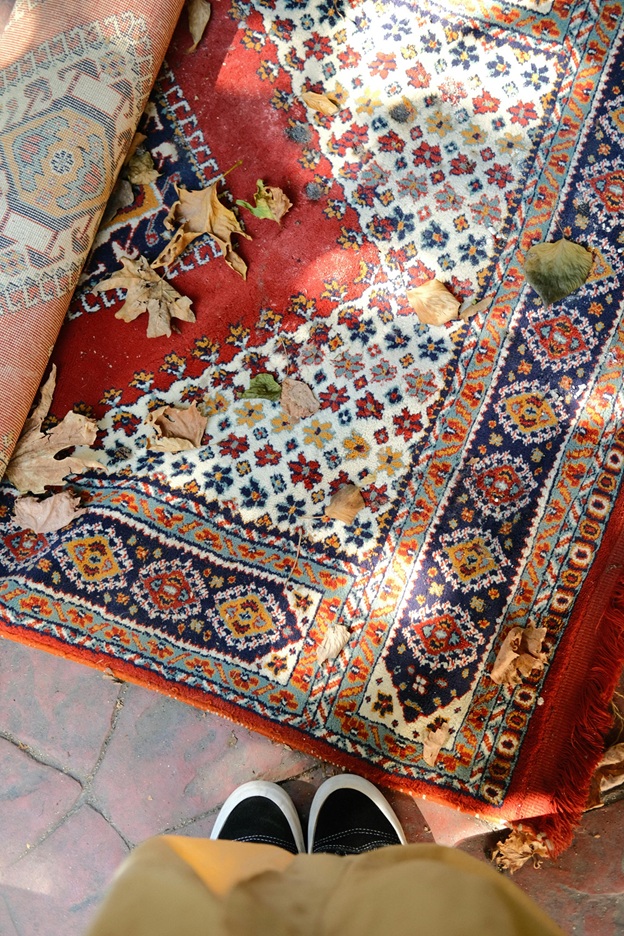
A wet rug can be saved — but only if you act quickly and use the right method for your rug type. Use the wrong technique (particularly heat or hanging when wet) and you risk permanent fibre damage, shrinkage, colour bleed, or mould setting in before the rug dries. Here’s what actually works.
⚠️
If water came from sewage, stormwater, or drain overflow, do not handle without protective equipment — this is Category 3 water requiring professional decontamination.
Rug vs. Carpet: Why Drying Them Is Different
Fitted carpet is fixed to a subfloor with underlay beneath it — drying it means drying in place, which limits your options. A rug can be lifted, moved, flipped, and hung, which gives you far more control over the drying process.
The trade-off is that many rugs — particularly natural-fibre rugs like wool and jute — are extremely sensitive to water. Incorrect drying causes irreversible damage: backing separates, pile distorts, dyes bleed, and fibres shrink. The flexibility of a removable rug is only an advantage if you handle it correctly.
For fixed carpet emergencies, see our guide on wet carpet cleaning and restoration in Sydney for the specific steps you’ll need to follow.
Before You Start: Assess the Water Source
Before you do anything else, identify where the water came from. This determines whether the rug is safe to handle yourself.
Category 1 — Clean Water
Burst pipe, rain, tap overflow. Safe to handle yourself. Proceed with the methods below.
Category 2 — Grey Water
Washing machine or dishwasher overflow. Wear gloves. Rug needs sanitisation after drying, not just drying alone.
Category 3 — Black Water
Sewage, stormwater, flood water. Do not handle without protective equipment. Requires professional decontamination.
Indoor Drying Methods for Wet Rugs
Using Fans and Dehumidifiers
This is the most effective indoor drying method for medium-sized rugs. Remove as much surface water as possible first — blot with thick dry towels, pressing firmly. Then follow these steps:
- 1
Lay the rug flat on a clean, dry surface — avoid concrete, as it transfers moisture upward into the rug. - 2
Point two or more fans directly at the rug surface at floor level for maximum airflow across the pile. - 3
Run a dehumidifier in the same room to pull moisture from the air as it evaporates from the rug. - 4
After 4–6 hours, flip the rug and dry the underside — this is where moisture lingers longest. - 5
Continue until completely dry throughout — press your hand firmly into the pile; any coolness means it’s still wet.
Baking Soda Absorption Technique
Baking soda does not dry a wet rug — it absorbs odour and residual moisture from a mostly dry rug. Apply it only when the rug is 80–90% dry. Sprinkle generously, leave for 4 hours, then vacuum thoroughly.
Hanging the Rug Indoors
Hanging a wet rug works well for smaller rugs under 2–3 kg when wet. Drape over a sturdy indoor clothes rack, a banister, or a ceiling-mounted laundry rack.
- Avoid hanging by one end — the weight of a wet rug can stretch the weave
- Drape evenly across the support point and point a fan at both sides
- Do not hang wool rugs — the wet weight causes irreversible stretching
Outdoor Drying Methods
Sunlight Drying
Sunlight is effective and free, but use it carefully. Direct Australian summer sun can fade some rug dyes and cause synthetic fibres to become brittle.
✓ Safe in full sun
Synthetic rugs (polypropylene, nylon) — handle sunlight well
⚠ Use shade or filtered light
Wool, Persian, and natural-fibre rugs — avoid colour fade and fibre damage
Lay flat on a clean dry surface — avoid grass, which introduces moisture from below.
Draping Over a Railing or Fence
This works for smaller rugs in fine weather. Drape evenly, turning every 2 hours to expose both sides.
Professional rug drying protects your fibres and your investment.
Drying by Rug Type: What Works and What Ruins Your Rug
Unsure whether your rug has been wet too long? Read our guide: How Long Can Carpet Stay Wet Before It’s Damaged or Grows Mould?
Drying Method Comparison Table
Use this reference to match your situation to the best drying method before you start.
| Method | Best For | Avoid With | Est. Drying Time |
|---|---|---|---|
| Fans + dehumidifier (indoors) | All rug types | Nothing — universally safe | 8–24 hrs depending on thickness |
| Outdoor sun (flat) | Synthetic rugs | Persian, wool, hand-knotted | 4–8 hrs (good conditions) |
| Hanging outdoors | Synthetic, small flat-weave | Wool, Persian, large rugs | 6–12 hrs |
| Outdoor shade | Wool, Persian, natural fibre | N/A — safe with even airflow | 12–24 hrs |
| Baking soda application | Odour absorption on nearly-dry rug | Wet or damp rugs (creates paste) | Deodorising step only, not drying |
| Professional rug drying | All types, especially wool/Persian | N/A — best option for valuable rugs | 24–48 hrs (monitored) |
When to Call a Professional Rug Cleaner
DIY methods are appropriate for small, synthetic rugs caught quickly after a clean water spill. Call a professional when any of the following apply:
- ✗
The rug is wool, Persian, hand-knotted, or antique - ✗
The rug is large and difficult to handle safely when saturated - ✗
The water source was grey or black water (washing machine overflow, sewage, stormwater) - ✗
The rug has been wet for more than 12–24 hours - ✗
You can see or smell any sign of mould — musty or earthy odour, dark spots - ✗
The rug has sentimental or high monetary value
Mould from a poorly dried rug is a serious health concern. Read more about how wet carpet and rugs can affect your health and why fast action matters.
For mould that has already taken hold, our team provides certified mould remediation services across Sydney to eliminate the problem at the source.
Ruined rug? We’ll tell you if it can be saved.
Get a free assessment from Flood Services Sydney — available 24/7, on-site within the hour.
Frequently Asked Questions
Emergency Response
On-Site Response Time
Damage Assessment
Certified Technicians