What Is Water Damage Carpet Cleaning? (vs. Regular Cleaning)
Water damage carpet cleaning is not the same as a regular carpet steam clean. It is a multi-stage restoration process that addresses moisture, contamination, structural drying, and odour elimination. Here is what the process actually involves, what it costs, and what to ask before you book anyone to do it.
What Is Water Damage Carpet Cleaning? (vs. Regular Cleaning)
Regular Carpet Cleaning
Water Damage Carpet Cleaning
Removes dirt, stains, and surface soiling
Addresses water, contamination, mould risk, and structural moisture
Necessary — failing to address water damage causes mould and structural damage
The 5 Stages of Professional Water Damage Carpet Cleaning
Stage 1: Moisture Assessment and Scoping
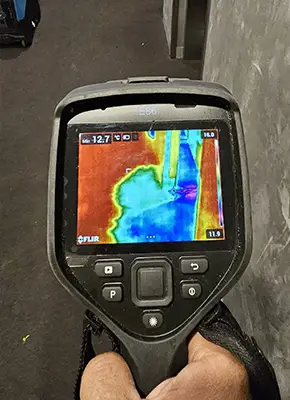
Before any equipment is deployed, a qualified technician uses thermal and pin moisture meters to map the affected area. This tells them where the water has reached, how saturated the carpet and underlay are, and whether the subfloor has been affected. This scoping step is not optional — it determines the entire treatment plan and provides baseline readings for insurance documentation.
Want to know which stage your carpet is at? Get a free moisture assessment — we will tell you exactly what is needed.
Stage 2: Water Extraction
High-powered extraction removes standing and surface water from the carpet and underlay. Truck-mounted units provide significantly greater suction than portable equipment, removing more water per pass and reaching deeper into the underlay. This step reduces drying time dramatically — the more water extracted at this stage, the faster and more reliably everything dries.
Stage 3: Antimicrobial Treatment
Once the bulk of the water is extracted, antimicrobial agents are applied to the carpet and underlay to kill existing bacteria and prevent mould germination. The treatment dwell time varies depending on the product — technicians time this precisely. This stage is essential for Category 2 and 3 water situations and strongly recommended for any carpet that has been wet for more than 24 hours.
Stage 4: Industrial Drying
Industrial air movers and commercial dehumidifiers are positioned throughout the affected area and run continuously — typically 24 to 72 hours. The air movers create a high-velocity air layer across the carpet surface, accelerating evaporation. The dehumidifiers extract that moisture from the air. Technicians return to monitor readings and reposition equipment as needed. This is the longest stage of the process.
Stage 5: Deodorising and Final Inspection
Once moisture readings confirm the carpet, underlay, and subfloor have reached safe levels, odour neutralisers are applied to address any residual smell from the water event. A final moisture reading is taken and documented. If the readings are within the Australian standard for structural dryness, the job is complete and a sign-off report is issued.
If a technician arrives with only a portable carpet cleaner and a domestic fan, they are not equipped to do the job properly. Ask specifically about their extraction and dehumidification equipment before booking.
How Much Does Water Damage Carpet Cleaning Cost in Australia? (AUD)
Scenario
Estimated Cost
Notes
Small area (1 room), clean water, quick response
$500–$900
Lower complexity; shorter drying time
Medium area (2–3 rooms), clean water
$900–$1,800
More equipment; 2–3 day drying period
Large area or grey/black water
$1,800–$2,500+
Decontamination required; possible underlay replacement
Underlay replacement (per room)
$200–$600 additional
If underlay cannot be restored
Full carpet replacement (per room)
$800–$3,000+ additional
If carpet is beyond restoration
These are estimates. Get a written, itemised quote before committing to any work. A reputable company will provide this at the assessment stage.
How to Choose a Water Damage Carpet Cleaning Provider
IICRC Certification: What It Means
The IICRC (Institute of Inspection, Cleaning and Restoration Certification) is the international standard for water damage restoration. IICRC-certified technicians have completed formal training in water damage assessment, moisture science, and restoration processes. In Australia, certification is not legally required — but it is a reliable indicator of professional competence. Ask for the technician’s IICRC certification number and verify it if you want certainty.
10 Questions to Ask Before Booking
Are your technicians IICRC certified? What certifications do they hold?
What moisture-measuring equipment do you use?
Do you use truck-mounted extraction or portable equipment?
How many air movers and dehumidifiers will you place for the affected area?
Will you provide moisture readings before, during, and after the job?
What antimicrobial products do you use, and are they hospital-grade?
Will you assess whether the underlay needs replacing?
How many monitoring visits are included in the price?
Will you provide a written report suitable for an insurance claim?
What is your response time for an emergency booking?
How Long Does It Take? Timeline Expectations
Stage
Typical Duration
Initial assessment and extraction
2–4 hours (day of call)
Antimicrobial treatment dwell
1–2 hours
Industrial drying (equipment running)
24–72 hours
Monitoring visits
Once or twice daily during drying
Equipment removal and final inspection
1–2 hours
Total elapsed time
2–5 days typically
Frequently Asked Questions
How much does water damage carpet cleaning cost?
Between $500 and $2,500 for most residential situations, depending on the area affected, water category, and whether underlay replacement is required. Always get an itemised quote. The assessment is usually free and gives you a clear scope before any commitment.
How long does professional carpet drying take?
The equipment typically runs for 24–72 hours. The total job — from initial assessment to final sign-off — is usually 2–5 days. Factors that extend this include large areas, thick underlay, concrete subfloors, and high ambient humidity.
What certification should a carpet drying company have?
IICRC (Institute of Inspection, Cleaning and Restoration Certification) is the internationally recognised standard. Look specifically for WRT (Water Restoration Technician) certification. It is not legally required in Australia, but it is the clearest indicator of proper training and process knowledge.