Professional Carpet Drying Services in Australia: The Complete Buyer’s Guide
Need a professional carpet drying service now? Call us — we respond within 60 minutes across Sydney.
Not all carpet drying services are equal — and choosing the wrong one can cost you more than the original damage. This guide gives you everything you need to choose a qualified provider, understand what you are paying for, and ask the right questions before anyone sets foot in your home.
What Does a Professional Carpet Drying Service Actually Do?
Measuring actual moisture content in carpet, underlay, and subfloor — not just checking if it “feels” dry
Determining the water category (clean, grey, or black water) to plan the correct treatment
Extracting water at a volume and depth that consumer equipment cannot achieve
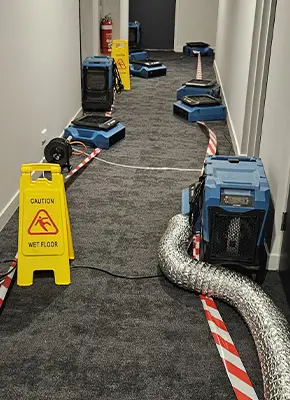
Placing industrial drying equipment and monitoring it over 24–72 hours
Applying antimicrobial treatment where contamination is present
Assessing whether the underlay can be dried or needs replacing
Documenting moisture readings for insurance purposes
Signing off only when calibrated meters confirm safe moisture levels throughout the system
The difference between this and consumer-grade drying is not just speed — it is certainty. Professional equipment and processes give you a verifiable outcome, not a guess.
Equipment Explained: What Separates a Pro from DIY
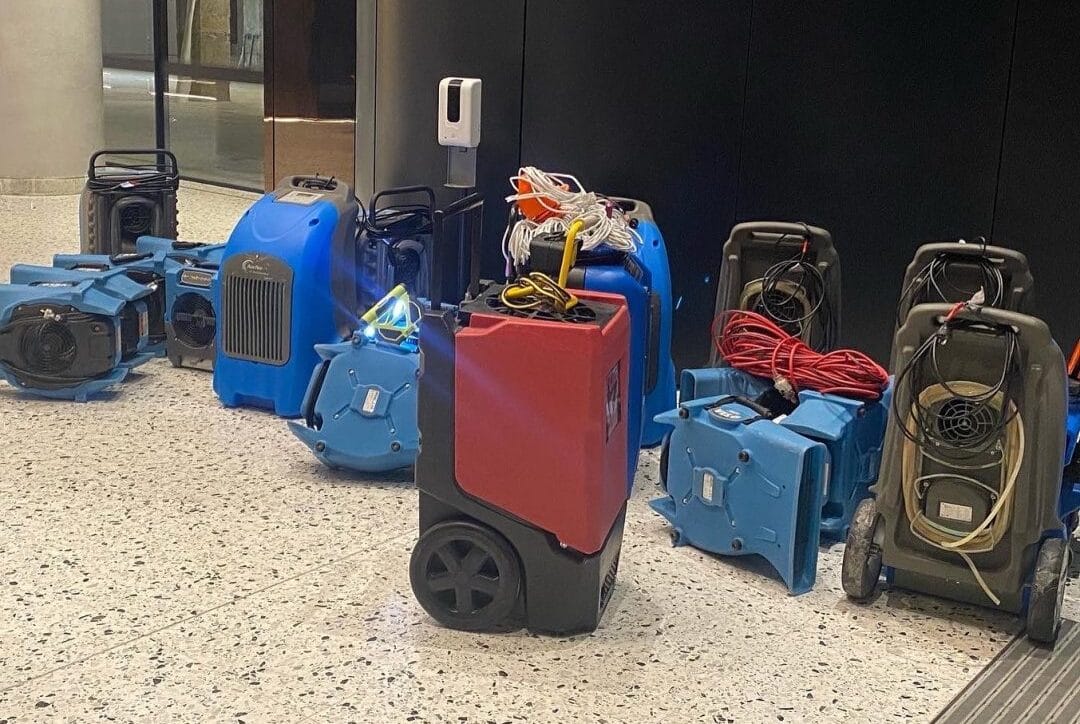
Industrial Dehumidifiers
Commercial dehumidifiers extract 50–200+ litres of moisture from the air per day, depending on the model. A household dehumidifier manages 10–25 litres per day. In a room with 30–50 litres of moisture needing to evaporate, the difference between a 24-hour job and a 5-day job is significant — and every extra day in the mould window increases your risk.
High-Power Air Movers
Air movers are not fans. They are engineered to create a precise high-velocity airflow layer across the carpet surface at floor level, accelerating moisture evaporation from the fibres without lifting the carpet or reducing the seal between equipment and the floor. Multiple air movers are positioned in a daisy-chain pattern to move moisture toward the dehumidifier intake. Consumer fans do not replicate this effect.
Thermal Moisture Meters
Thermal (non-invasive) meters scan large areas for moisture content without contact — useful for mapping the wet zone quickly. Pin meters measure precise moisture content at specific points. Together, they give technicians a complete picture of where water is and whether drying is progressing correctly. Without these, you are working on assumption.
Truck-Mounted Extraction Units
Truck-mounted units generate suction levels 8–20 times greater than portable extractors. They can remove water from deep in the underlay in a single slow pass — pulling water that portable equipment cannot reach. The hose runs from the truck parked outside into the property. For heavily saturated carpet, this first extraction step is where the majority of the work gets done.
How Much Does Professional Carpet Drying Cost in Australia? (2026)
Job Type
Estimated Cost
Typical Time on Site
1 room, clean water, rapid response
$500–$900
2–3 days (equipment monitoring)
2–3 rooms, clean water
$900–$1,800
3–5 days
Whole property or grey/black water
$1,800–$4,000+
4–7 days
Emergency same-day call-out (after hours)
Add $150–$400 surcharge
Immediate response
Underlay replacement (per room, add-on)
$200–$600
Completed during drying period
Decontamination treatment (grey/black water)
$200–$600 additional
Stage within main service
These figures are estimates for the Sydney and NSW market. Costs vary by region, property size, and provider. Always get a written itemised quote before committing.
DIY vs. Professional vs. Full Replacement: Cost Comparison Table
Most professional carpet drying jobs take 2–5 days from initial assessment to final sign-off. The breakdown:
Day 1: Assessment, water extraction, antimicrobial treatment, equipment placement
Days 1–3: Equipment runs continuously; technician visits once or twice daily to check readings and reposition if needed
Day 2–5: Moisture readings are taken daily until all target zones reach safe levels
Final day: Equipment removed, final readings documented, written sign-off report issued
Same-Day and Emergency Carpet Drying: What to Expect
Most professional water damage companies offer emergency or same-day response — the faster you respond to water damage, the better the outcome. When booking an emergency service:
Expect a call-back within 30–60 minutes of enquiry
The technician will need access to the property for the full duration of the drying period
Emergency surcharges of $150–$400 apply for after-hours or weekend call-outs
Have your insurer’s contact details ready — the technician can assist with documentation at the same time
10 Questions to Ask Before Booking a Carpet Drying Service
Are your technicians IICRC certified? (Ask for the certification type — WRT is the most relevant.)
Do you use truck-mounted extraction or portable equipment?
How many air movers and dehumidifiers will you place for my job?
What moisture levels do you target before signing off the job?
Will you provide moisture reading documentation for my insurance claim?
How many monitoring visits are included?
Do you assess and replace underlay as part of your service?
What antimicrobial products do you use? Are they registered with the APVMA?
What is your call-out time for emergencies?
Do you provide a written scope and quote before starting work?
Red Flags: Signs of an Unreliable Provider
No mention of moisture meters or target readings — they are working on feel, not science
Quote given without seeing the property — proper scoping cannot happen remotely
No mention of dehumidification — fans alone will not dry saturated carpet
Unable to provide IICRC certification or any formal credentials
No written quote or scope of work — verbal only
Pressure to sign immediately or pay a large deposit upfront before any work begins
No insurance documentation offered — this suggests they lack the process or equipment to produce it
IICRC Certification: Why It Matters and What to Look For
The IICRC (Institute of Inspection, Cleaning and Restoration Certification) sets the global standard for water damage restoration. In Australia, there is no legal requirement for certification — anyone can call themselves a carpet drying professional. IICRC certification means the technician has completed verified, structured training in water damage science, moisture measurement, contamination classification, and equipment operation.
The most relevant certification for carpet drying is WRT (Water Restoration Technician). Higher-tier certifications include ASD (Applied Structural Drying) for technicians working on complex structural jobs. You can verify any certification at the IICRC’s online directory at iicrc.org.
Frequently Asked Questions
How much does carpet drying cost in Australia?
Between $500 and $2,500 for most residential jobs, with the range depending on the area affected, water category, and whether additional services (decontamination, underlay replacement) are required. After-hours emergency call-outs add $150–$400 to the base cost.
How quickly should carpet be dried professionally after flooding?
Within 24 hours is the target. Mould begins growing between 24–48 hours in Australian conditions. A professional response within the first 12–24 hours gives the best chance of full restoration without mould remediation or replacement.
Can professionals dry carpet in one day?
The extraction and initial treatment happen on day one. However, the drying process itself takes 24–72 hours of equipment run time — the carpet cannot be safely certified as dry in a single day. Any company claiming to fully dry and sign off a saturated carpet in under 24 hours is not following the correct process.