House Flooded? Here’s Exactly What to Do Right Now
When a flood hits your home, panic is natural — but the decisions you make in the first hour will determine how much damage your property sustains and how smoothly your insurance claim goes. Whether it is a burst pipe, a backed-up drain, or stormwater flooding in from outside, this step-by-step guide walks you through exactly what to do when your house is flooded.
Step 1: Make Sure It Is Safe to Enter
Before you do anything else, assess whether it is safe to go inside. Water and electricity are a deadly combination. If floodwater has reached power points, appliances, or your switchboard, do not enter the property. Turn off the electricity at the main switchboard only if you can reach it safely from a dry location. If in doubt, call an emergency electrician before entering.
Also check for structural damage — sagging ceilings, cracked walls, or a floor that feels soft or unstable. If you suspect structural compromise, stay out and call a professional.
Step 2: Stop the Water Source
If the flooding is coming from inside your home (burst pipe, overflowing appliance, blocked drain), locate and shut off the water supply at the main stopcock. This is usually located near the water meter outside or under the kitchen sink. Stopping the source immediately prevents the situation from worsening while you take the next steps.
If the flooding is from external stormwater or a rising waterway, focus on containing spread rather than stopping the source — sandbags at doorways and lifting valuables off the floor can help while you wait for the water to recede.
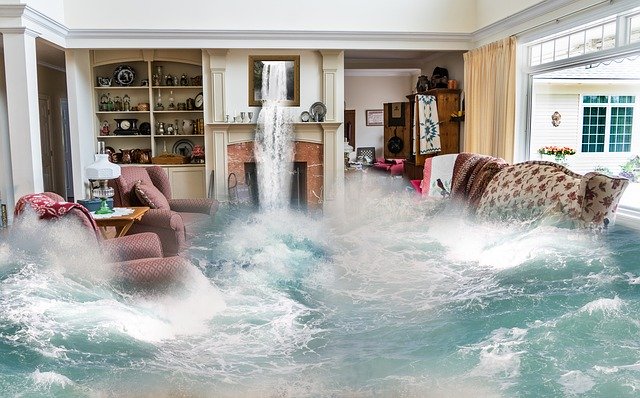
water damage on house floodActing fast after a flood limits damage — our team arrives within the hour across Sydney
Step 3: Document Everything Before You Move Anything
This step is critical for your insurance claim and is one most homeowners skip in the rush to clean up. Before touching a single item:
Film a continuous video walkthrough of every affected area
Photograph all damaged contents, flooring, walls, and ceilings
Note the approximate water level on walls if visible
Keep any damaged items — do not throw anything away until your insurer advises
The more thorough your documentation, the stronger your claim. Our water damage restoration team also provides professional moisture logs and damage reports that support insurance submissions — this alone often makes a significant difference to claim outcomes.
Step 4: Notify Your Insurer Immediately
Call your home and contents insurer as soon as you have documented the damage. Most policies require you to notify them within a specific timeframe, and delaying this can complicate your claim. Have your policy number ready and give them an honest account of what happened and when.
Ask them specifically:
Is temporary accommodation covered if the property is uninhabitable?
Are emergency restoration costs covered immediately?
Do I need to wait for an assessor before beginning cleanup, or can I proceed?
Step 5: Protect What You Can — Safely
Once you have documented damage and notified your insurer, you can begin protecting your contents. Move furniture, soft furnishings, documents, and electronics to a dry area of the home or outside if weather permits. Place aluminium foil or plastic wrap under furniture legs sitting on wet carpet to reduce staining.
Do not use a regular household vacuum to try to extract water — it will not be effective and may be dangerous. Open windows and internal doors to improve ventilation, but avoid using portable heaters or fans as the sole drying method — these only address the surface and will not dry underlay or wall cavities.
Step 6: Call a Professional Flood Restoration Team
This is where the real recovery begins. Professional flood restoration is not just about removing visible water — it is about extracting moisture from every layer of your home: carpet, underlay, subfloor, wall cavities, and structural timbers. Without commercial-grade drying equipment, moisture trapped in these hidden layers will cause mould within 24 to 48 hours.
Flood Services Sydney arrives on-site within the hour, 24 hours a day, 7 days a week. Our technicians carry out a full moisture assessment using thermal imaging cameras and calibrated moisture meters, then deploy industrial air movers and dehumidifiers to dry your property thoroughly and efficiently.
If your home has experienced sewage flooding, professional help is not optional — sewage cleanup involves category 3 (black water) contamination that poses serious health risks and must be handled by trained technicians in full protective equipment.
What Not to Do After a Flood
Do NOT Do This
Why
Enter before checking electrical safety
Risk of electrocution from submerged power points or appliances
Throw away damaged items before insurer approval
May invalidate your claim for those items
Use household fans as the only drying method
Cannot reach moisture in underlay or wall cavities — mould will follow
Delay calling your insurer
Most policies have notification timeframe requirements
The timeline depends on the severity of the flood, the materials affected, and how quickly treatment begins:
Minor incident (one room, clean water, treated quickly): 3 to 5 days
Moderate flooding (multiple rooms, carpet and underlay saturated): 5 to 10 days
Severe event (subfloor, wall cavities, or sewage involved): 2 to 3 weeks
The sooner professional drying begins, the shorter and less costly the restoration. Every hour of delay increases the risk of mould, structural damage, and escalating repair costs.
Need Help Right Now?
Call Flood Services Sydney on 02 9167 9435 — we are available 24/7, arrive within the hour, and provide a free damage assessment. We work directly with all major Australian insurers and assist with your claim documentation at no extra charge.
Frequently Asked Questions
My house just flooded — what is the very first thing I should do?
Check for electrical safety first. If water has reached power points, turn off electricity at the switchboard from a dry location, or call an emergency electrician. Once safe to enter, stop the water source, document all damage with video and photos before moving anything, then call your insurer and Flood Services Sydney on 02 9167 9435.
What to do if house is flooded from rain?
Focus on limiting spread. Place towels at entry points, move contents away from wet areas, document the damage, and call your insurer. Then call a professional restoration team — rain-related flooding saturates underlay and wall cavities quickly and needs professional drying equipment to prevent mould.
What happens if I do not clean up flood water quickly?
Mould begins growing within 24 to 48 hours on wet surfaces. Timber floors start cupping within hours. Insurance costs increase the longer primary damage is left untreated. The first 24 hours after a flood are the most important window for limiting total damage.
How do I know if there is water inside my walls after a flood?
You usually cannot tell from the outside. A wall can look and feel dry while holding significant moisture inside. Professional technicians use thermal imaging cameras and calibrated moisture meters to detect hidden moisture — this is why a professional assessment is so important even for floods that appear minor.
How long does it take to restore a flooded house?
Minor incidents typically take 3 to 5 days. Moderate flooding takes 5 to 10 days. Severe events involving subfloor, wall cavities, or sewage can take 2 to 3 weeks. The faster treatment begins, the shorter the timeline.