Carpet and Underlay Drying: Why the Underlay Is the Hidden Risk After a Flood
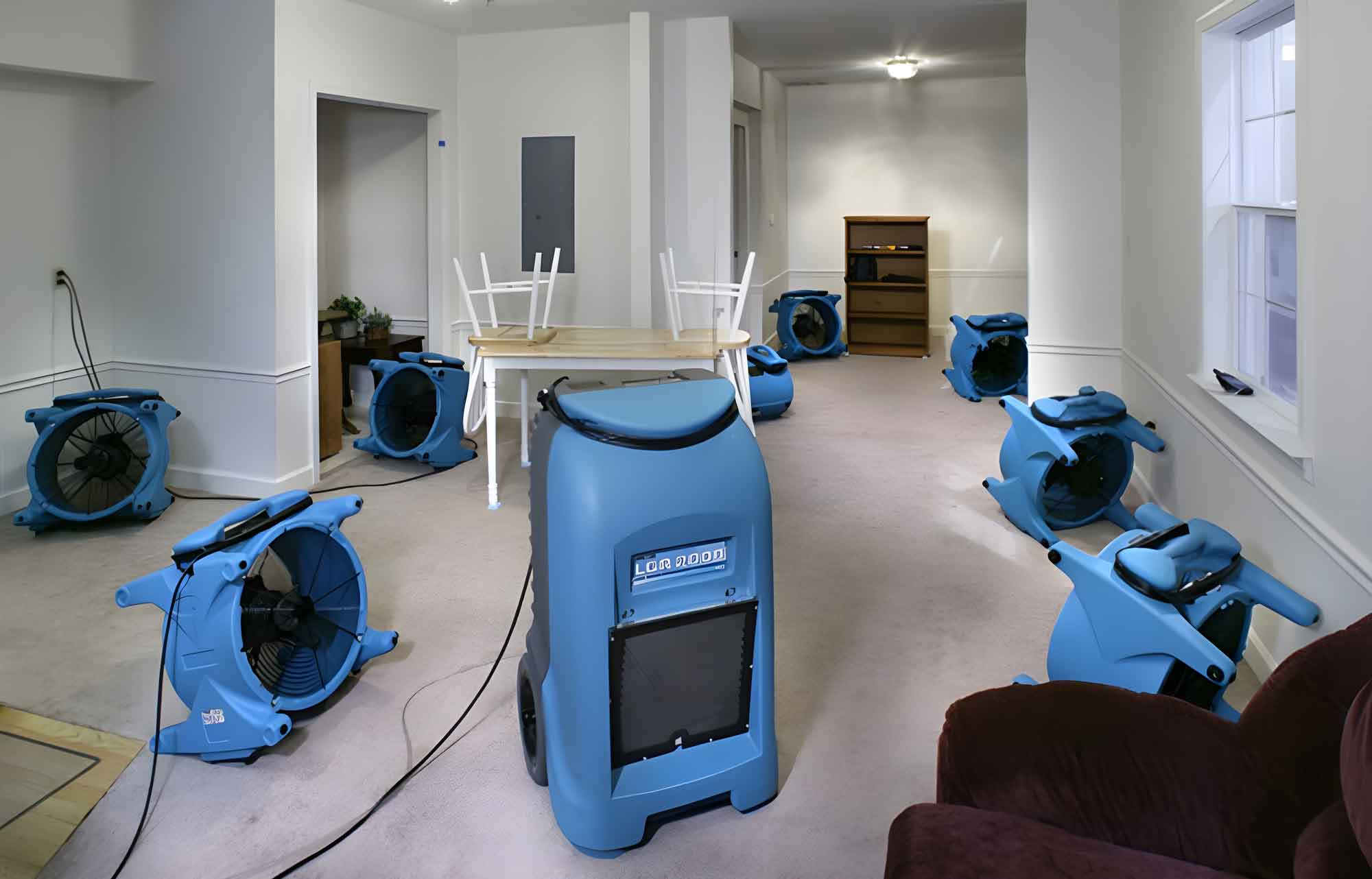
Professional carpet and underlay drying — the full system matters, not just the surface.
Your carpet might feel dry. Your underlay almost certainly is not. This is the single most common mistake homeowners make after a flood or water event — declaring the situation handled because the carpet surface feels dry, while a completely saturated underlay sits trapped below, quietly growing mould and degrading your subfloor. Here is what you need to know about the component most people forget.
What Is Carpet Underlay and Why Does It Hold So Much Water?
Underlay is the cushioning layer between your carpet and the subfloor. Its job is to provide comfort underfoot, reduce noise, and extend carpet life. It is typically made from foam (polyurethane or memory foam) or felt (recycled fibres) — both highly absorbent materials that function almost like a sponge when exposed to water.
When water enters your carpet, it moves downward by gravity. The carpet pile absorbs some of it, but the bulk passes straight through to the underlay. A standard foam underlay can hold many times its own weight in water. Once saturated, it releases that moisture slowly over days — even after the carpet surface appears and feels completely dry.
⚠
The carpet acts as a lid — trapping the underlay’s moisture and preventing it from drying naturally. Surface dryness is not the same as structural dryness.
The Hidden Risk: Why Wet Underlay Causes More Damage Than Wet Carpet
Mould Growth Under the Carpet
A saturated underlay creates a warm, dark, moist environment directly against the carpet backing and subfloor — ideal conditions for mould. Because it is hidden under the carpet, mould can establish and spread for days or weeks without any visible surface sign. By the time you smell it or see dark spots appearing at the edges, the mould colony beneath may already be significant. Learn more about what happens when mould takes hold in our mould remediation service.
Subfloor Damage from Trapped Moisture
Most Australian homes have either a timber or concrete subfloor beneath the carpet. Timber subfloors absorb water and swell, potentially causing floorboards to buckle, squeak, or separate. Concrete subfloors are porous — water penetrates the surface and can take days to fully dry, causing efflorescence (salt deposits) and a persistent moisture source that feeds ongoing mould growth. This is exactly why structural drying is a separate and critical step beyond just carpet drying.
The “Dry on Top, Wet Underneath” Problem
This is why touch-testing the carpet surface is not a reliable indicator of dryness. Carpet pile at the surface can feel dry within hours of water exposure if you have run fans across it. The underlay, however, remains saturated beneath — continuing to transfer moisture back up into the carpet from below and into the subfloor from above.
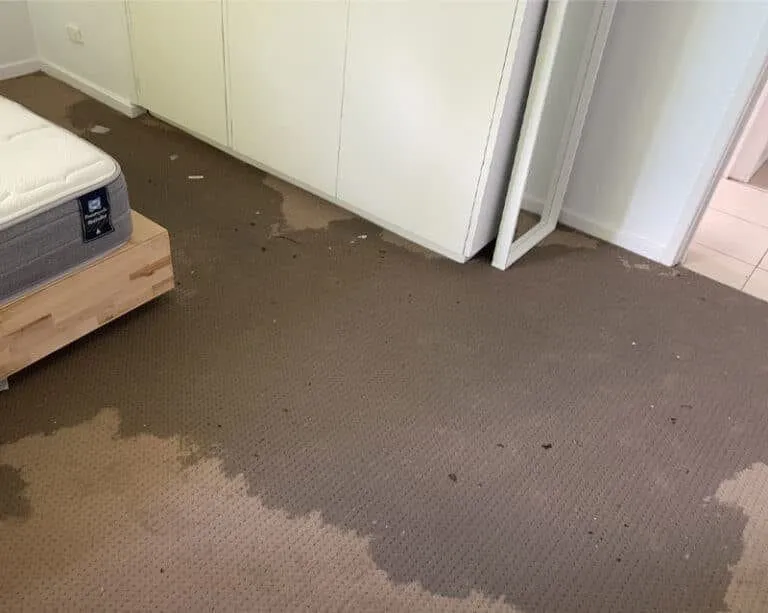
Industrial air movers force airflow between the carpet and underlay — a method not achievable with household fans.
How to Tell If Your Underlay Is Wet
Without lifting the carpet, here are four ways to assess underlay saturation:
1 The Press Test: Place your palm flat on the carpet and press down firmly. If you feel coolness or see any darkening of the carpet surface, the underlay is wet.
2 The Edge Lift: At a wall edge or doorway, lift a small section of carpet and press your finger into the underlay. If it is wet to the touch, it is saturated.
3 Smell: A musty smell coming from the carpet even after the surface dries is a strong indicator of wet underlay or mould beginning to grow in it.
4 Moisture Meter: A pin-type moisture meter inserted to the depth of the underlay gives a definitive reading. This is what professionals use — and it is the only method that gives you certainty.
Not Sure If Your Underlay Can Be Saved?
Our team uses calibrated moisture meters to check what you cannot see — no guesswork, just data.
Can Underlay Be Dried — Or Does It Need to Be Replaced?
This depends primarily on the underlay type and how long it has been wet.
Thin Foam Underlay: Usually Replace
Thin polyurethane foam underlay (typically 6–10mm) absorbs water quickly and dries poorly. Its cell structure breaks down when wet, permanently losing its cushioning properties. It also becomes a dense mould host. In most water damage situations involving this underlay type, replacement is the practical recommendation — the material cost is relatively low and replacement is far simpler than attempting to dry foam in place.
Thick Felt Underlay: Sometimes Salvageable
Thicker felt or recycled-fibre underlay can sometimes be dried successfully if the water event involved a clean source and the drying response was quick (within 6–12 hours). Professionals will lift the carpet, extract water from the underlay directly, and run drying equipment with the underlay exposed to airflow. This is far more effective than attempting to dry underlay through the carpet above it. Our carpet drying service in Sydney covers this exact process.
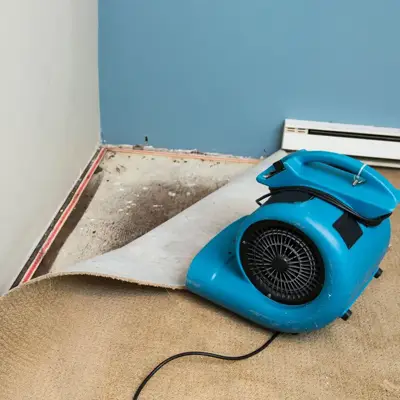
Lifting the carpet edge to access and directly dry the underlay — the correct professional approach.
Decision Guide: Dry or Replace?
Use this table to assess what the right call is for your situation:
Condition
Underlay Recommendation
Clean water, caught within 6 hours, thin foam underlay
Consider Replacing — foam does not dry reliably
Clean water, caught within 6 hours, thick felt underlay
Likely Salvageable — with professional drying
Grey water (any underlay type)
Replace — contamination penetrates the material
Black water — sewage, stormwater, flood (any underlay)
Replace — not safely restorable
Any water, 24+ hours elapsed
Replace — mould likely already established
Visible mould on underlay surface
Replace Immediately
What Professionals Do to Dry Carpet and Underlay Together
A professional water damage response treats carpet and underlay as a system — not as separate items. Here is what that process looks like on-site:
1
Moisture Measurement:Calibrated thermal and pin meters measure actual moisture content in both carpet and underlay separately — not just a surface feel-check. This process follows the procedures set out in the ANSI/IICRC S500 Standard for Professional Water Damage Restoration, the global benchmark for certified water damage technicians.
2
High-Powered Water Extraction:Truck-mounted or industrial portable units extract water from the carpet surface, far exceeding what any wet-dry vacuum can achieve.
3
Carpet Edge Lift and Direct Underlay Access:The carpet is lifted at edges to directly access and extract moisture from the underlay surface — the most effective method.
4
Air Mover Positioning:Industrial air movers are positioned under the carpet edge to force airflow through the cavity between carpet and underlay, accelerating evaporation in both layers simultaneously.
5
Daily Monitoring:Moisture readings are taken in both layers daily until safe targets are reached across the entire system — carpet, underlay, and subfloor confirmed dry.
6
Replacement Decision:The call on underlay replacement is based on measured moisture readings and material type — not a guess. If measured readings cannot be brought to safe levels, replacement is the recommendation.
Want to understand the full professional extraction process? Read our guide on water extraction in Sydney — covering how truck-mounted units work and why they are the gold standard for flood response.
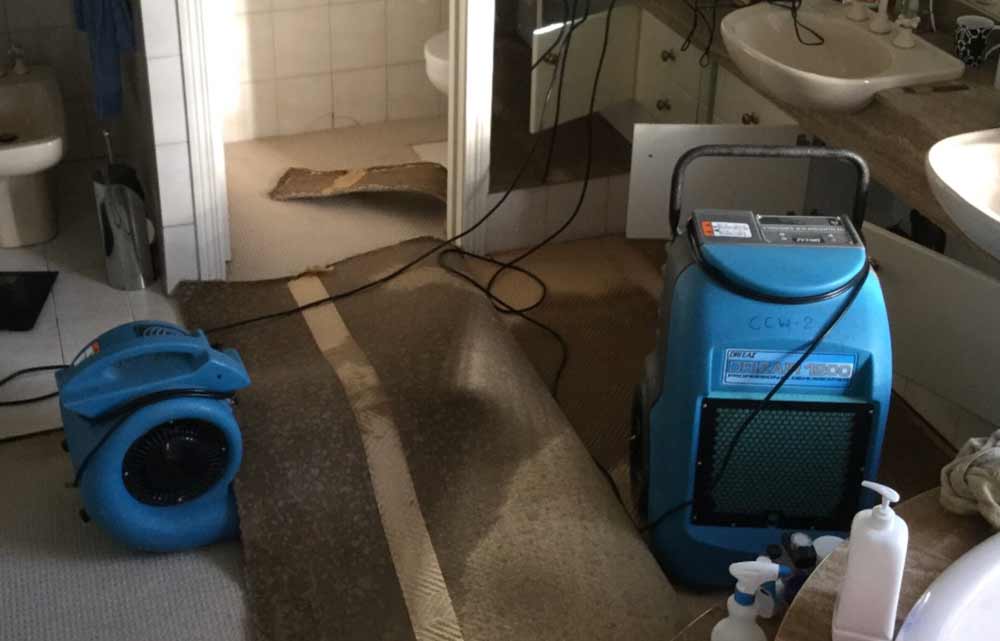
Professional moisture assessment before treatment — the step that determines whether drying or replacement is the right call.
Cost of Underlay Replacement vs. Full Carpet Replacement
Understanding the cost difference helps homeowners make faster, better decisions:
Scope
Estimated Cost (per room)
Notes
Underlay replacement only
$200 – $600
Carpet re-laid over new underlay if carpet is salvageable
Carpet replacement only
$800 – $3,000+
If underlay is intact and clean
Full carpet + underlay replacement
$1,200 – $4,500+
Depends on carpet quality and room size
Professional drying (in place)
$500 – $2,000
Where drying is viable — saves replacement cost entirely
Professional drying is almost always cheaper than replacement — but only when you act quickly. Every additional hour of delay narrows the window for restoration and moves you closer to full replacement cost.
In most flooding situations — especially where the water source was grey or black water, or where significant time has elapsed — yes. Underlay is relatively inexpensive to replace and very difficult to fully decontaminate once saturated with contaminated water. In clean water situations caught quickly, some underlay types can be professionally dried and retained. A moisture reading is the only reliable way to confirm.
How long does it take for underlay to dry? +
With professional drying equipment running continuously — air movers plus dehumidifiers — underlay can reach safe moisture levels in 24 to 72 hours depending on the material type and thickness. Thin foam underlay often fails to reach safe levels even with equipment running, reinforcing the recommendation to replace it rather than attempt in-place drying.
Can wet underlay cause mould to grow through the carpet? +
Yes. Moisture migrates from the wet underlay back up into the carpet backing and fibres, particularly as ambient temperature fluctuates. Mould established in the underlay spreads to the carpet backing and can eventually appear on the carpet surface. If you are seeing mould on your carpet surface after a relatively minor water event, the underlay is the likely source — not the carpet itself.
Can I dry underlay myself with fans and a dehumidifier? +
Consumer-grade fans and dehumidifiers can help at the carpet surface level, but they cannot effectively dry underlay in place. The carpet itself acts as a barrier, preventing adequate airflow from reaching the underlay. Without lifting the carpet and using industrial air movers positioned to create airflow in the cavity beneath the carpet, the underlay will remain wet far beyond the safe mould window — even if your room feels dry.
How do I know if my subfloor has also been damaged by wet underlay? +
Common signs of subfloor damage include: floorboards squeaking where they did not before, noticeable flex or bounce underfoot, visible buckling or rippling of the floor surface, or a persistent damp smell even after the carpet has been dried. A professional will use a pin moisture meter to test the subfloor directly and can advise whether structural intervention is needed. This is something our structural drying team handles as part of a complete water damage assessment.
The Carpet Looks Fine. The Underlay May Not Be.
Find out before mould finds you. Our team is available 24/7 across Sydney — we are on-site within the hour.